Three Things You Need to Know About Bioproducts
Hey everyone!
I am sure a lot of us have heard all about how we have to start making smarter choices as consumers. Every day we use products like disposable cutlery when we go out to eat or plastic bags as we go shopping. But here is the issue with that - there is only so much of those products we can use and honestly, the means of producing and disposing of those nonrenewable products is seriously detrimental to our environment. We have got to think about the future of our planet here! So here is the alternative: bioproducts. Bioproducts are made from renewable biomass products that are already in abundance like plants, and actually helps reduce greenhouse gas emissions through its production! So let us talk about the three things you need to know about bioproducts in order to make the change and begin the significant act towards a better future!
At the heart of producing bioproducts, we have to consider where the process starts - from converting crops to sugar and fermentation. Through the process of extracting sugars from plant-based materials that are in abundance, such as corn, we make the first step towards a more sustainable future - by using a natural resource that can be replenished rather naturally and quickly, unlike through nonrenewable resources which simply use up our resources. These sugars can then be fermented into various products. A Frontier’s Review Article shows that the production of biosurfactants (which is usually used for cosmetics, soil bioremediation, or new polymer synthesis) through this process is becoming increasingly popular due to it showing “less toxicity, higher biodegradability, and resistance to temperature”. This shows that the production methods behind bioproducts truly are beneficial in terms of how the products last as well as how sustainable they are.
Now let us look at specific examples of bioproducts and what you should know about them. Bioplastics are “plastics derived from renewable biomass sources” (Lesson 20). On the other hand, traditional plastics are made from non-renewable resources such as petroleum and truly have terrible impacts on the environment. While we do have to consider that the production of these products differ greatly in terms of their impact, we also have to talk about the products in use. Most bioproducts, since they are derived from natural resources, are typically made to be biodegradable or compostable, so that it can be broken down into natural components rather than being just waste. Another bioproduct, biofuels are greatly beneficial because we can reduce our dependence on fossil fuels and consequently lower the overall greenhouse gas emissions. So truly, by looking at these examples of bioproducts we can see that they provide a better alternative to the nonrenewable resources in use.

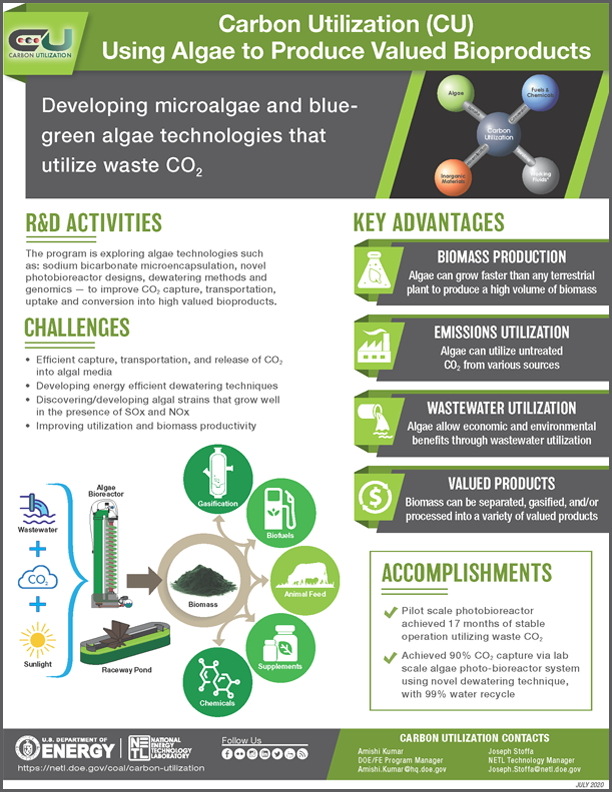
The above image is an infographic from the National Energy Technology Laboratory and shows specifically information regarding using algae to produce valued products. As the infographic explains, there truly are so many benefits to using the naturally derived products due to how it allows us as consumers to make strides towards a more environmentally friendly, sustainable future.
All in all, we have really got to think about the world we are currently living in and how we are leaving it for future generations. With the use of nonrenewable resources for products, we are simply using up any resources we do have and harming the environment, leaving it to be in shambles for the foreseeable future. But, the alternative of using bioproducts through this methods I have talked about, does take a significant step towards reducing the harmful effects we have had and taking advantage of plentiful resources that we have access to. I hope this post has been informative and I hope you take the initiative to buy more products that are derived from biorenewable resources.
References:
Lesson 18: Crops to Sugar, BBE 1002, UMN
Lesson 19: Fermentation, BBE 1002, UMN
Frontiers Article: https://www.frontiersin.org/articles/10.3389/fsufs.2019.00063/full
Lesson 20: Bioplastics, BBE 1002, UMN
Lesson 22: Other Biobased Products, BBE 1002, UMN


Comments
Post a Comment